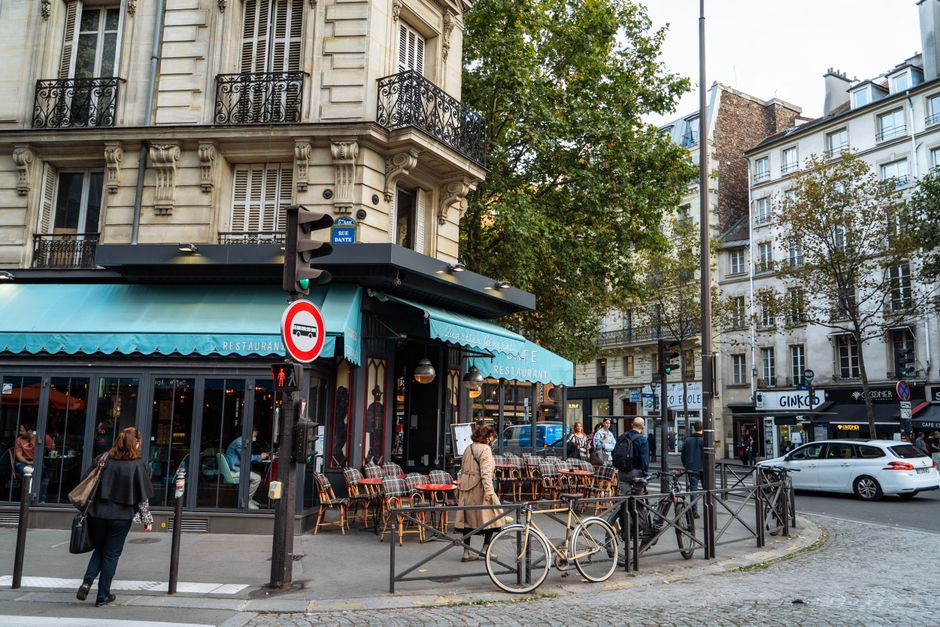
 Photo by Daria Agafonova on Pexels
Common French Last Names: Meanings, Origins & Pronunciation
Dubois, Lefebvre, Petit, Martin: French last names still carry real meaning. Discover the origins, pronunciation, and history behind common French surnames.
You meet someone named Dubois, or Lefebvre, or Petit, and it barely registers as a name at all -- until you realize dubois literally means "of the wood," Lefebvre is a disguised version of "the blacksmith," and Petit is just the everyday word for "small." Unlike English surnames, which mostly stopped meaning anything centuries ago, French last names still wear their history on their sleeve, and once you know how to read them, half the phone book turns into a story.
This matters for more than trivia. If you're learning French, you'll fill out a form with nom and prénom fields, introduce yourself with your full name at a language exchange, or meet a French colleague whose surname you want to pronounce correctly instead of guessing. French last names follow real patterns -- where they came from, how they're built, and how they're said out loud -- and those patterns overlap with vocabulary and pronunciation rules you're already learning elsewhere in French. Once you can spot the pattern, an unfamiliar surname stops being a wall of silent letters and starts being decodable, the same way an unfamiliar verb becomes readable once you know its conjugation family.
Most French surnames fall into one of four families, and recognizing which one you're looking at is the fastest way to understand what a name is actually saying. The first is patronymic -- a surname built from an ancestor's first name. Martin, the single most common surname in France, comes from Martinus, an old first name honoring the god Mars; Bernard, Robert, and Thomas all started the same way, as someone's father's name frozen into a family name generations later. The second family is occupational, naming the job an ancestor once held: Boulanger (boo-lahn-zhay) means "baker," Meunier (muh-nyay) means "miller," Berger (behr-zhay) means "shepherd," and Lefebvre -- one of the trickiest to spot -- is a worn-down version of le fèvre, an old word for "the blacksmith," related to the same Latin root as février (February, the month of forging) and to the English word "fabricate."
The third family is toponymic, describing where an ancestor lived: Dubois (du-bwah) means "of the woods," Dupont (du-pohn) means "of the bridge," Dumont (du-mohn) means "of the mountain," and Fontaine (fohn-tehn) simply means "spring" or "fountain." The fourth family is descriptive, built from a physical trait or nickname someone actually had: Petit (puh-tee) means "small," Legrand (luh-grahn) means "tall" or "big," Leroux (luh-roo) means "the redhead," and Lebrun (luh-bruhn) means "the brown-haired one" -- the French equivalent of an English surname like Brown or Short, minted the same way, just further back in history and less obviously translatable at a glance.
A short set of words worth knowing before you go further: le nom de famille (luh nohm duh fah-mee) -- last name, family name; le prénom (luh pray-nohm) -- first name; un patronyme (uhn pah-troh-neem) -- a patronymic surname; un métier (uhn may-tyay) -- a trade or occupation; la particule (lah par-tee-kewl) -- the "de" prefix seen in some surnames; un nom composé (uhn nohm kohm-poh-zay) -- a hyphenated double surname. [AUDIO: nom de famille] [AUDIO: quel est votre nom de famille]
Pronunciation is where French surnames genuinely reward attention, because the same silent-letter rules that govern ordinary vocabulary apply here too, sometimes with an extra twist. Final consonants usually stay silent, so Dubois drops its final s (du-bwah, not "du-bwahs") the same way bois (wood) does on its own. But surnames don't always follow the rule perfectly -- Mitterrand, the former president's name, keeps its silent final d, while some regional surnames pronounce a consonant that would be silent in ordinary vocabulary, which is why the safest approach with an unfamiliar name is always to ask rather than assume. Endings in -eau and -ault both make a single "oh" sound, so a name like Rousseau is roo-soh, not "roo-so." One name worth singling out for how far it drifts from its spelling is Lefebvre itself: even French speakers pronounce it several different ways depending on the region -- leh-fev-ruh, luh-febr, or luh-fehv are all heard -- because the spelling froze centuries ago while everyday pronunciation kept moving on without it.
A cultural detail worth knowing is the particule -- that small "de," "du," or "des" you see at the front of some names, as in de Gaulle, du Pont, or des Rosiers. Popular belief treats every particule as proof of aristocratic ancestry, and historically it often did signal nobility or a landed estate, but that's not a safe rule to apply today: plenty of particule surnames are simply toponymic, meaning "from" a specific place, with no noble connection at all. It's the kind of detail confident-sounding guesses get wrong constantly, so treat "de" as a clue worth noticing, not proof of anything on its own. A newer detail: since a 2005 law, French parents can give their children a nom composé, a hyphenated surname combining both parents' family names, which is why you'll increasingly meet people whose last name is genuinely two surnames joined together rather than one inherited from a single side of the family.
Here's where this becomes useful in daily interaction. On a French form, the nom field always means your family name, and prénom means your given name -- reverse those, and you'll fill out the form backward. French official documents also often print the family name first and in capital letters, so DUBOIS Marie means Marie Dubois, not two first names; that flipped, capitalized order can look unfamiliar the first time you see it on an ID card or a boarding pass. When you introduce yourself formally or answer the phone, Quel est votre nom de famille ? (What is your last name?) is the question you'll be asked, and if the answer is unusual or hard to catch, following up with Comment ça s'écrit ? (How is that spelled?) is completely normal, even between native speakers. In writing, address someone formally as Monsieur or Madame followed only by the surname -- Monsieur Dubois, Madame Lefebvre -- never the first name, until you're invited to use it.
Try these before checking the answers. First, which family does the surname Boulanger belong to: patronymic, occupational, toponymic, or descriptive? Second, translate: "Quel est votre nom de famille ?" Third, true or false: every surname starting with "de" indicates noble ancestry. Fourth, fill in the blank with the correct French term for "first name": Sur ce formulaire, écrivez votre nom, puis votre ___. Fifth, pronounce Dubois out loud using the hints above -- is the final s silent or pronounced? Sixth, what does a nom composé combine?
Answer key: Boulanger is occupational -- it means "baker." "What is your last name?" False -- a particule often signaled nobility historically, but many "de" surnames are simply toponymic, describing where a family came from, with no noble connection. The blank is prénom. The final s in Dubois is silent -- it's pronounced du-bwah. A nom composé combines both parents' family names into one hyphenated surname, an option available to French parents since a 2005 law.
Three things worth carrying forward: French surnames sort into four recognizable families -- patronymic, occupational, toponymic, and descriptive -- and spotting which one you're looking at instantly tells you something about the name's history. The particule "de" is a clue worth noticing but not proof of nobility on its own. And on any French form, nom always means your family name while prénom means your first name, in that order. Next time you meet someone named Petit, Fontaine, or Boulanger, you'll know exactly what their ancestors were once called, tall, or trading in. For more on the sounds and patterns behind names like these, browse Passage's Vocabulary section, or head to Grammar to see the same silent-letter rules at work across the rest of the language.