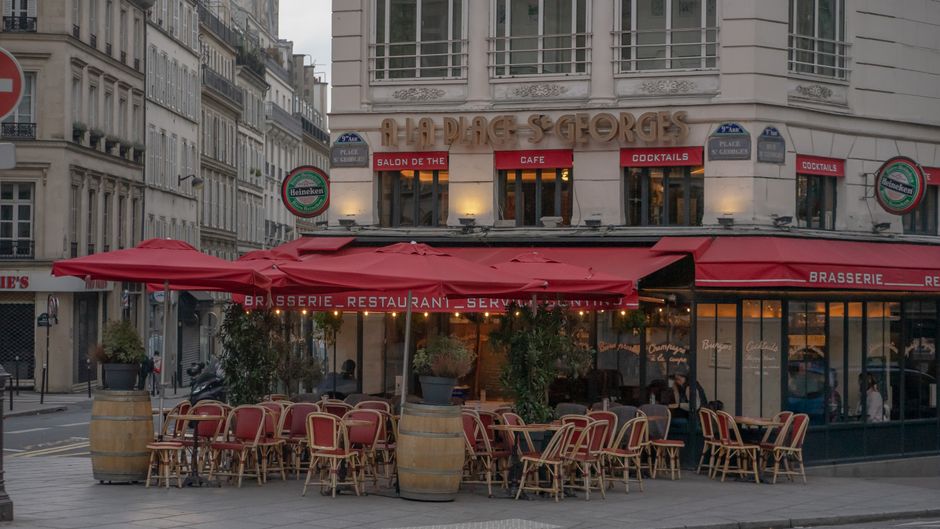
 Photo by Paul on Pexels
English Names in French: Find Your Equivalent
What is your name in French? See how English names like John, Mary, and Elizabeth become Jean, Marie, and Élisabeth -- and which names have no equivalent.
On the first day of French class, your teacher hands out a sign-up sheet and tells everyone to pick a French name for the semester -- and half the room panics, because "Emily" doesn't have an obvious French twin the way "Mary" and "John" do. Some names cross the English Channel almost untouched. Others transform completely. And a few simply don't survive the trip at all.
Every language grows its own version of the names that recur across Western history -- saints, kings, and Bible figures whose names got borrowed and reshaped by each language's sound system over centuries. That's why John becomes Jean in French and Juan in Spanish, all tracing back to the same Hebrew root, while a newer name like Kayla simply has no French counterpart. Knowing the French equivalent of your own name isn't just an icebreaker for language class -- it trains you to spot name cognates the moment you meet French speakers, and makes "foreign" names feel a lot less foreign once you see how many are really the same name in different clothes.
Names That Barely Change
Some names cross into French with almost no adjustment at all -- same spelling, same root, and the only real difference is how a French speaker's mouth handles the letters.
Key Phrases
- Daniel (dah-nyel) -- spelled identically in both languages, but French drops the hard English stress and softens the middle syllable
- Nicolas (nee-koh-lah) -- same spelling as the English Nicolas, but the final s stays completely silent
- Thomas (toh-mah) -- same spelling, but French drops the "th" sound entirely and silences the final s
- Victor (veek-tor) -- identical spelling, pronounced with a rolled French r
- Isabelle (ee-zah-bell) -- just one letter removed from Isabel, and instantly recognizable either way
- Sophie (soh-fee) -- identical spelling and meaning in both languages
[AUDIO: Daniel, Nicolas, Thomas, Isabelle]
The spelling is the trap here. These names look so familiar that English speakers default to English pronunciation rules -- and end up sounding foreign to a French listener expecting the silent letters and different vowel sounds French spelling actually demands.
Classic English Names and Their French Twins
This is the category most people picture when they imagine "translating" a name -- names that share a common ancestor but drifted into distinct forms in each language over centuries of separate evolution.
Key Phrases
- John -- Jean (zhahn) -- both descend from the Hebrew Yohanan, "God is gracious"
- William -- Guillaume (ghee-yohm) -- same Germanic root, "helmet of will"
- Henry -- Henri (ahn-ree) -- nearly the same word, just missing the English h sound
- Mary -- Marie (mah-ree) -- one of the most direct translations you'll find in either direction
- Elizabeth -- Élisabeth (ay-lee-zah-bet) -- spelled almost identically, with a French accent added
- Margaret -- Marguerite (mar-guh-reet) -- also, charmingly, the French word for daisy
- Peter -- Pierre (pee-air) -- both mean "rock," from the Greek petros
- Charles -- Charles (sharl) -- same spelling, but French drops the final s in pronunciation
- George -- Georges (zhorzh) -- French adds a silent final s that English doesn't have
[AUDIO: Jean, Guillaume, Henri, Marguerite, Pierre]
Grammar Note
Most of these pairs share a root even when they look nothing alike on the page, because both borrowed from the same source -- usually Hebrew, Greek, or Latin -- and each language applied its own centuries of sound change on top.
- Common mistake: assuming a paired name must look similar to be "the same" name -- Peter and Pierre share no letters at all, yet both trace straight back to petros.
- Common mistake: pronouncing a French name using English rules just because the spelling looks close, like saying "Charles" with the final s instead of leaving it silent.
When There's No French Equivalent (and the One Surprising Exception)
Plenty of English names simply don't have a French twin to translate into, and that's most true of names that became popular recently rather than names with centuries of history behind them.
Key Phrases
- Emily / Emma -- no true French equivalent for Emily, though Emma is already identical and hugely popular in France
- Ashley, Madison, Tyler -- modern English names with no French counterpart; French speakers keep the name as-is if they encounter it
- Jessica -- exists unchanged in both languages, one of the rare modern names that never needed translating
- Kevin (kay-veen, French pronunciation) -- Irish in origin, no connection to translation at all, yet enormously common in France for reasons that have nothing to do with Ireland
[AUDIO: Kevin]
Kevin deserves its own footnote. The name barely existed in France before the 1990s, then exploded after Kevin Costner became a huge star there -- so much so that French sociologists coined the term "kévinisme" to describe the trend. It's a reminder that not every name pair is about translation -- sometimes a name just travels because of a movie.
When your own name falls into this no-equivalent category, French speakers won't invent something for you. They'll use it exactly as it's spelled, just filtered through French pronunciation habits, rather than turning it into a new word altogether.
How French Grammar Treats Names
Names might seem exempt from grammar, but French still has a few firm rules about how they behave, easy to get wrong if you're used to English habits.
Grammar Note
Unlike ordinary nouns, French first and last names never take an article on their own -- Marie arrive (Marie is arriving), never la Marie arrive, in standard French. Family names are also invariable in the plural, which trips up learners who assume every plural noun needs an -s.
- les Martin (the Martins) -- never les Martins, even when the sentence is clearly plural
- les Dupont habitent à Lyon (the Duponts live in Lyon) -- the surname stays frozen in its singular form
- Common mistake: adding a French article before a first name in formal writing, like la Sophie, which actually sounds regional and overly casual rather than more correct
- Common mistake: pluralizing a family name with -s the way you would an ordinary noun
Capitalization works the same as in English, at least -- one rule that transfers over without adjustment.
Finding (and Using) Your Own French Name
Picture yourself back in that French class, sign-up sheet in hand, working through the decision instead of panicking over it. First, check whether your name is already French, the way Sophie or Daniel already are. Next, look for a historical twin -- if you're a Peter, Henry, or Elizabeth, there's almost certainly a Pierre, Henri, or Élisabeth waiting for you. If neither applies, don't force a translation: keep your name as it is and simply adjust the pronunciation.
Practice Exercises
- Fill in the blank: the French equivalent of "John" is ___.
- Fill in the blank: the French equivalent of "Peter" is ___, from the Greek word for "rock."
- True or false: "Charles" is spelled the same in English and French, but pronounced differently.
- Translate into French, keeping the surname unchanged in the plural: "The Martins are arriving."
- Multiple choice: which name has essentially no traditional French equivalent? (a) Henry (b) Ashley (c) Margaret
- Fill in the blank: French names never take an article, so you say "___ arrive," not "la Sophie arrive."
Answer Key
- Jean.
- Pierre.
- True -- Charles is spelled identically, but the final s stays silent in French.
- Les Martin arrivent.
- (b) Ashley.
- Sophie arrive.
Your Name, in French
- Some English names cross into French almost unchanged, like Daniel and Sophie, where only the pronunciation really shifts.
- Classic names like John, Mary, and Peter have true French twins -- Jean, Marie, and Pierre -- built from the same Hebrew, Greek, or Latin roots.
- Modern names without a French equivalent, like Ashley or Emily, simply keep their spelling and get filtered through French pronunciation instead.
Next time someone asks for your name in French class, you'll know exactly which category you fall into instead of guessing. Head over to Vocabulary for more everyday word sets that follow these same cross-language patterns, or try the Grammar lessons on articles to see why names get to skip the le and la that every other noun needs.