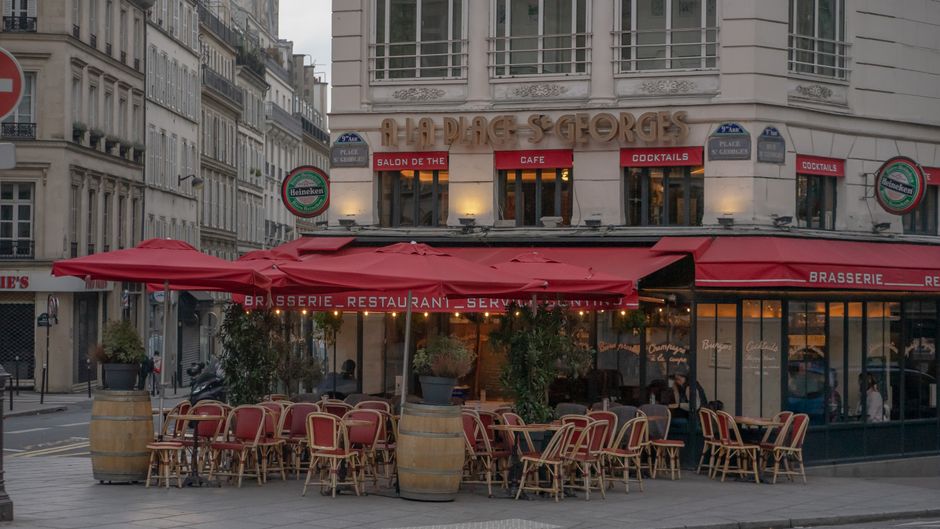
 Photo by Paul on Pexels
How to Say "Excuse Me" in French
Excusez-moi, pardon, or je suis désolé(e)? Here's exactly which French phrase for "excuse me" fits interrupting, apologizing, or asking someone to repeat.
You're squeezing past someone on a crowded train in Paris, and without thinking you blurt out "Excusez-moi" -- and get a small nod back, no fuss at all. Ten minutes later you bump someone's elbow at a café and say the exact same "Excusez-moi," and this time the moment feels slightly off, like you didn't quite apologize enough. English uses one all-purpose "excuse me" for getting someone's attention, squeezing past, interrupting a conversation, and even a light apology -- French splits that single word into several, and reaching for the wrong one is one of the fastest ways to sound like you're translating in your head rather than actually speaking French.
This matters more than it might seem for a two-word phrase, because knowing how to say excuse me in French is one of the first practical things you'll need on any trip -- getting a waiter's attention, moving through a packed métro car, interrupting a conversation to ask directions, or apologizing for stepping on someone's foot. It isn't just about vocabulary; it's about matching the right phrase to the right social moment, since French treats these as genuinely separate situations rather than one flexible word doing everything the way English does.
Excusez-moi: Your Safe, All-Purpose Default
Excusez-moi (ehk-skew-zay mwah) is the phrase to reach for when you're not sure which one you need -- it covers getting someone's attention, asking to pass, and interrupting politely, all at once. It's built from the imperative of s'excuser (to excuse oneself) plus moi (me), so it literally means something closer to "excuse yourself to me" than a single fixed word.
Key Phrases
- Excusez-moi (ehk-skew-zay mwah) -- Excuse me (formal or general, vous)
- Excuse-moi (ehk-skewz mwah) -- Excuse me (informal, tu -- close friends, kids, people your own age you already know well)
- Excusez-moi de vous déranger (ehk-skew-zay mwah duh voo day-rahn-zhay) -- Excuse me for bothering you
[AUDIO: excusez-moi]
Grammar Note
Both forms follow the same pattern as any French imperative aimed at getting someone's attention: the reflexive verb s'excuser drops its subject pronoun and keeps the reflexive pronoun attached after a hyphen.
- (vous) excusez-moi -- excuse me
- (tu) excuse-moi -- excuse me
- Common mistake: defaulting to excuse-moi with a stranger, a shopkeeper, or anyone older than you. French politeness leans formal with people you don't know well, so excusez-moi is the safer choice until someone signals you can switch to tu.
Pardon: Quicker, More Casual, Still Useful for a Real Apology
Pardon (par-dohn) is shorter than excusez-moi and does double duty -- it works as a quick "excuse me" when you're squeezing past someone or need to interrupt for a second, and it also works as a brief, genuine "sorry" for something small, like bumping an elbow or stepping on a foot. Unlike excusez-moi, pardon doesn't change form for tu or vous, which makes it an easy, low-effort default in fast-moving situations.
Key Phrases
- Pardon (par-dohn) -- Excuse me / Sorry (works for both, any register)
- Pardon, monsieur / madame (par-dohn muh-syuh / mah-dahm) -- Excuse me, sir / ma'am
[AUDIO: pardon]
French speakers reach for pardon constantly in tight, everyday spaces -- squeezing down a métro aisle, threading through a market crowd, getting past someone in a narrow café doorway. Listen for it on any French street and you'll notice it lands as a light social reflex, not a heavy apology, the way an English speaker might murmur "sorry" while passing a stranger without breaking stride.
Je Suis Désolé(e): When You've Actually Done Something Wrong
For anything bigger than a passing bump -- showing up late, forgetting something you promised, genuinely inconveniencing someone -- reach past pardon for je suis désolé(e) (zhuh swee day-zoh-lay), "I'm sorry." This is a real apology, not a passing-through reflex, and French speakers notice the difference between the two the same way English speakers notice the gap between a mumbled "sorry" and someone actually stopping to say "I'm really sorry about that."
Key Phrases
- Je suis désolé (zhuh swee day-zoh-lay) -- I'm sorry (a man speaking)
- Je suis désolée (zhuh swee day-zoh-lay) -- I'm sorry (a woman speaking -- same pronunciation, spelling adds an e)
- Désolé(e) du retard (day-zoh-lay dew ruh-tar) -- Sorry for the delay
- Je suis vraiment désolé(e) (zhuh swee vray-mahn day-zoh-lay) -- I'm really sorry
Grammar Note
Désolé(e) is an adjective, not a fixed word, so it agrees with the speaker's gender the way any French adjective does -- add an e if you're a woman speaking, even though the two versions sound identical out loud.
- je suis désolé (said by a man)
- je suis désolée (said by a woman)
- Common mistake: reaching for je suis désolé(e) for a light métro-aisle squeeze-by. It's not wrong, but it's oddly heavy for the moment -- native speakers save it for apologies that actually need weight behind them, and use pardon or excusez-moi for the small stuff.
Pardon? -- A Completely Different Job
Say pardon with a rising, questioning tone and it stops meaning "excuse me" altogether -- it becomes "what did you say?", the polite way to ask someone to repeat themselves. This is the same word doing a second, unrelated job, and only the intonation tells you which one you're hearing.
Key Phrases
- Pardon ? (par-dohn, rising tone) -- Sorry? / What did you say?
- Comment ? (koh-mahn) -- What? (more casual than pardon ?)
- Vous pouvez répéter, s'il vous plaît ? (voo poo-vay ray-pay-tay, seel voo pleh) -- Could you repeat that, please?
[AUDIO: pardon ?]
Putting It All Together
Picture a Saturday morning at a busy market in Lyon. You need to squeeze past a crowd near a stall, so you say Pardon as you slip through. A few steps later you want the vendor's attention to ask about the cheese, so you lead with Excusez-moi, c'est combien le fromage ? (Excuse me, how much is the cheese?). While reaching for your wallet you accidentally knock a jar off the table -- that's a real Je suis désolé(e) !, not a quick pardon. And if the vendor answers too fast for you to catch the price, Pardon ? -- with the question lilt -- gets it repeated.
Practice Exercises
- Fill in the blank: You need to get past someone on a crowded bus. "___, je peux passer ?"
- True or false: pardon and excusez-moi both work for squeezing past someone, but only pardon can also mean "what did you say?"
- Translate (a woman speaking, genuine apology for being late): "I'm really sorry for the delay."
- Which is more formal: excuse-moi or excusez-moi?
- You didn't hear what your host just said. What do you say, and how should your tone sound?
- Fill in the blank with the correct gender agreement (a man speaking): "Je suis ___."
Answer Key
- Pardon, je peux passer ?
- True -- both work as "excuse me," but pardon ? with a rising tone is the one that also means "what did you say?"
- Je suis vraiment désolée du retard.
- Excusez-moi is the formal/general (vous) version; excuse-moi is informal (tu).
- Pardon ? -- said with a rising, questioning tone.
- Je suis désolé.
Four Phrases, Four Different Moments
- Excusez-moi is your safe default for getting attention, passing by, or interrupting politely.
- Pardon is quicker and more casual -- and with a rising tone, it switches jobs entirely to mean "what did you say?"
- Je suis désolé(e) is for a real apology, not a passing bump, and agrees with your gender.
Next time you need to say excuse me in French, you'll know exactly which of the four to reach for. Head over to Vocabulary to build out more everyday phrases like these, or try a round of Exercises to drill tu versus vous until switching between them feels automatic.